How AI Workflow Automation and Task Management Tools Work Together to Eliminate Busywork
Busywork — repetitive, low-value tasks like updating spreadsheets, copying information between apps, or manually assigning follow-ups — quietly drains hours from every workweek. The good news is that AI workflow automation tools and an AI task manager don’t have to work in isolation. When combined, they create a system that removes manual effort at nearly every step. This article explains how these two tools work together and why pairing them delivers far more value than using either alone.
The Problem With Using Task Managers Alone
Even the best AI task manager can only do so much if it’s disconnected from the rest of your workflow. A task manager organizes what needs to be done, but it doesn’t necessarily know why a task exists or what triggered it. Without automation, someone still has to:
- Manually create tasks from emails, forms, or meeting outcomes
- Update task status across multiple tools
- Notify team members when something changes
- Re-prioritize tasks as new information comes in
This manual bridging between tools is exactly the kind of busywork that eats into productive hours.
What AI Workflow Automation Adds
AI workflow automation tools connect different apps and systems so information flows between them without human input. Instead of a person copying data from one place to another, automation tools detect triggers and take action automatically. For example:
- A new customer inquiry email automatically creates a task in your task manager
- A completed task automatically notifies the next person in line
- Data from a form submission is automatically organized and assigned
When automation handles these connections, your task manager becomes more than a to-do list — it becomes the action center of an intelligent, self-updating workflow.
How the Two Systems Work Together
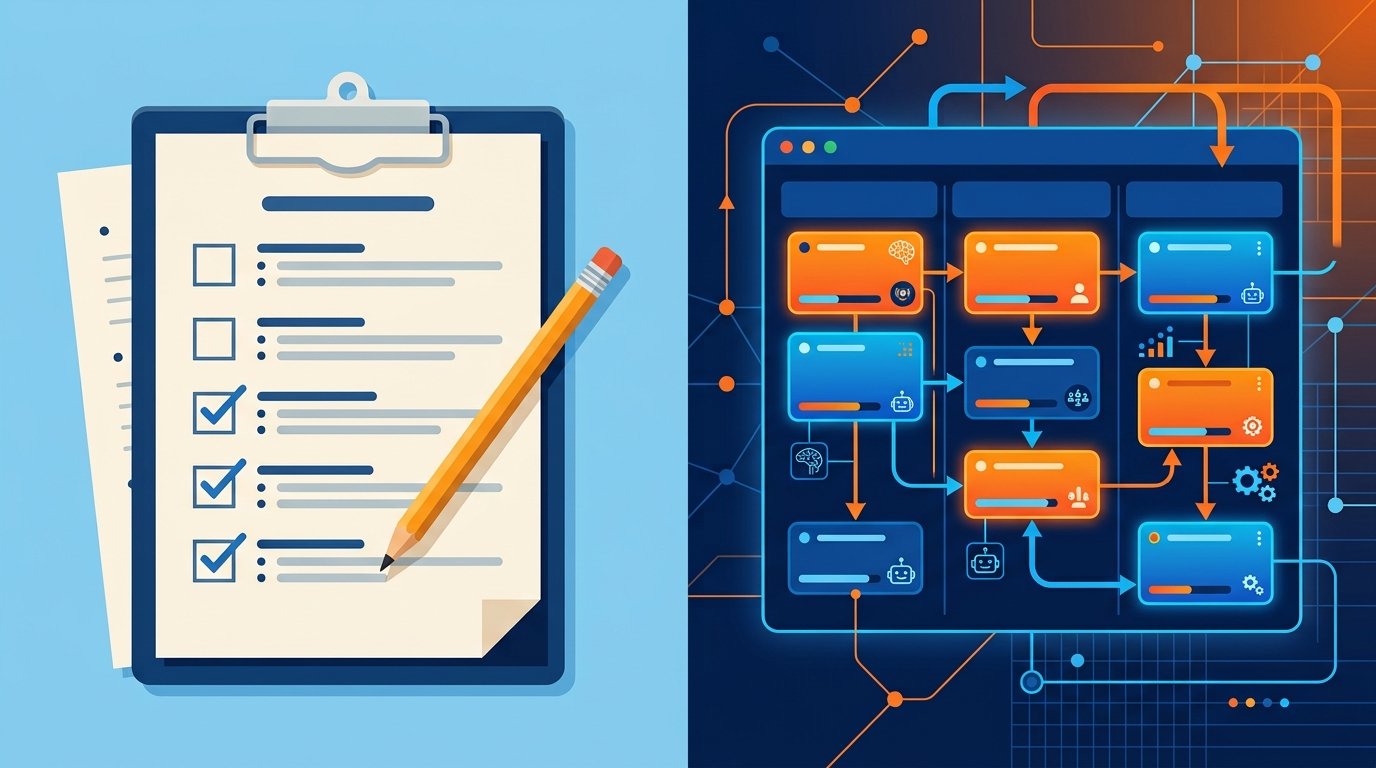
Here’s a simple breakdown of how these tools typically integrate in a real workflow:
| Step | Without Automation | With AI Workflow Automation + Task Manager |
|---|---|---|
| Task creation | Manually typed in | Auto-created from triggers (emails, forms, meetings) |
| Prioritization | Manually decided | AI-suggested based on urgency and workload |
| Updates | Manually shared across tools | Automatically synced in real time |
| Meeting follow-ups | Manually noted and assigned | Auto-converted from meeting notes into tasks |
| Reporting | Manually compiled | Auto-generated from task data |
This is also where an AI tool for meeting notes plays a critical role. When meeting summaries and action items are automatically extracted and pushed directly into a task manager, no one has to sit down after a call to manually write out follow-ups — the busywork is eliminated at the source.
Real Examples of Busywork Elimination
- Sales teams: A new lead form submission automatically creates a follow-up task and assigns it to the right rep — no manual entry needed.
- Project teams: Meeting notes are transcribed and summarized by an AI tool, with action items instantly appearing as tasks with due dates.
- Support teams: Automation flags urgent customer emails and creates high-priority tasks without anyone needing to monitor the inbox manually.
In each case, the task manager doesn’t just store information — it becomes the destination point for automated workflows, removing the manual steps that used to take up hours each week.
Getting Started Without Overcomplicating It
You don’t need an expensive enterprise setup to benefit from this pairing. Many people start with an AI task manager free plan and a lightweight automation tool to connect just one or two key triggers — like auto-creating tasks from emails. As the time savings become clear, expanding automation across more of the workflow becomes an easy decision.
Final Thoughts
Task managers organize work. Automation tools eliminate the manual effort required to keep that organization updated. Together, an AI task manager and AI workflow automation tools — especially when paired with an AI tool for meeting notes — create a workflow where busywork simply disappears, leaving more time for the tasks that actually require human judgment.